Over the last 6 weeks, I looked at sports from several angles. Physical development, cognitive development, social-emotional growth, mental well-being, inclusion and equity, and the shared role of families, schools, coaches, and communities. I also completed the Fundamental Movement Skills course, which deepened my understanding of how kids actually learn to move. Here’s the big picture that emerged.
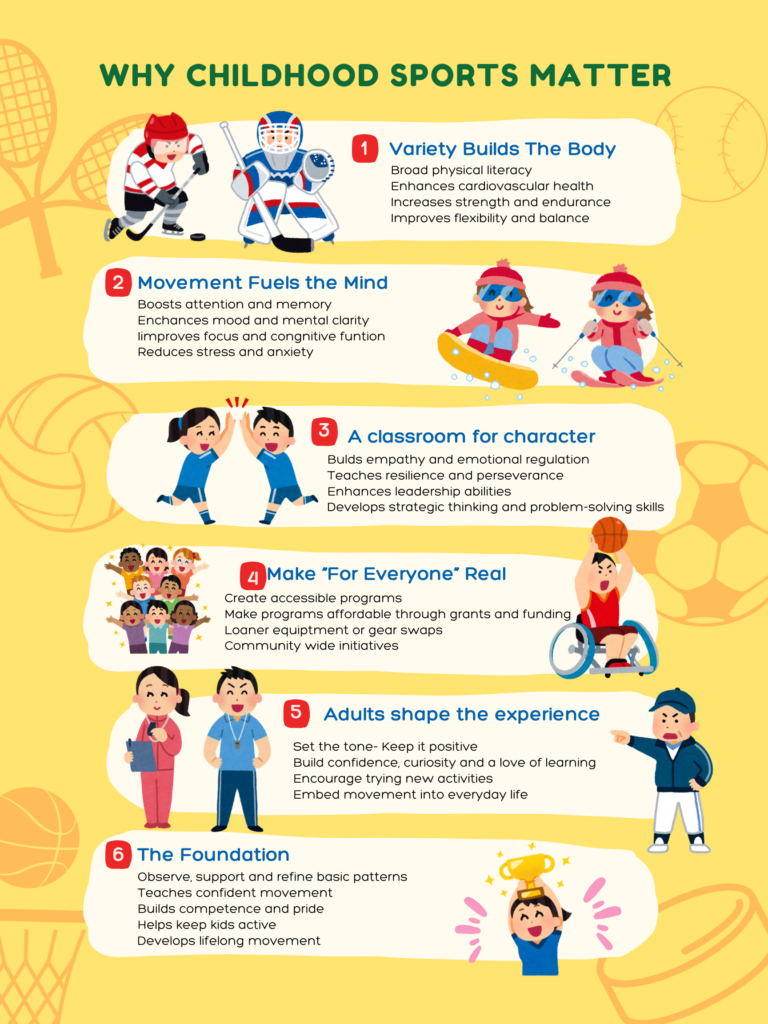
1) Variety Builds the Body
Trying many activities (not specializing too early) develops balance, coordination, agility, and strength. I saw this at home when hockey balance transferred straight to skiing on a first try. Different sports stress the body in different ways, reducing overuse, burnout, and keeping movement fun. Building broad physical literacy—running, jumping, throwing, catching, balancing—sets kids up for whatever sport (or life task) comes next.
2) Movement Fuels the Mind
Regular activity boosts attention, memory, and problem-solving. Team and non-contact sports are linked with fewer behavioural and social challenges and better mental-health outcomes. In class terms: more movement = more ready brains. Variety matters here too; multiple sports give kids frequent, different cognitive challenges, learning to read a play, adapting quickly, and trying new strategies.
3) Sport Is a Classroom for Character
The smallest moments, missing a goal, falling on a run, taking a breath on an icy hill, all teach perseverance, emotional regulation, and courage. Confidence often grows from small wins after repeated effort, not from medals. Team spaces also teach empathy: passing the puck, cheering for a friend, helping a teammate. That’s leadership in its simplest form.
4) Inclusion and Equity Make “For Everyone” Real
“Sports are for everyone” only comes true when access is real: accessible programs, affordable programs, loaner equipment, local options, and flexible schedules. Grants and community initiatives can remove barriers. Recreational and community-based programs matter just as much as competitive ones, often more because they focus on belonging, confidence, and joy.
5) Parents, Coaches, and Teachers Shape the Experience
- Parents set the tone: keep it positive, value rest and free play, and avoid pressure.
- Coaches can make or break a child’s relationship with movement. Great coaches teach skills while building confidence, curiosity, and a love of learning.
- Teachers (and schools) connect movement to everyday life. Embedding Fundamental Movement Skills and play into the school day so every child gets chances to move and feel capable.
6) Fundamental Movement Skills Are the Foundation
From the Fundamental Movement Skills course: many kids opt out of activity because they don’t feel confident moving “the right way.” That’s a solvable problem. When we observe, support, and refine basic patterns, while we pair structured learning with unstructured play, kids build competence, pride, and the belief, “My body can do this.”
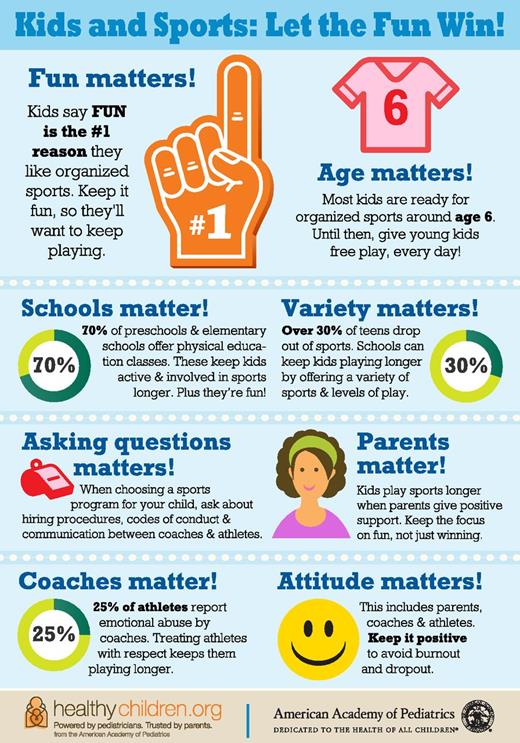
Variety in sport is valuable because it:
- builds broad physical literacy (the transferable “how” of movement);
- strengthens cognitive skills (focus, decision-making, creativity);
- supports mental health and emotional regulation;
- reduces burnout and overuse injuries;
- increases joy, confidence, and long-term participation.
The goal isn’t producing elite athletes. It’s raising kids who want to move, kids who see movement as part of who they are.
What I’ll Carry Forward (as a Mom, Coach, and Teacher)
- Keep sport fun, varied, and age-appropriate.
- Celebrate effort and mini-milestones more than outcomes.
- Protect time for free play alongside structured practice.
- Offer on-ramps for every child: low-cost options, loaner gear, nearby programs.
- Teach and notice Fundamental Movement Skills daily. Little corrections = Big confidence.
- Remember that belonging is a performance enhancer.
Let’s raise kids who love moving their bodies in various ways.
Sorry, but comments are not enabled on this site.