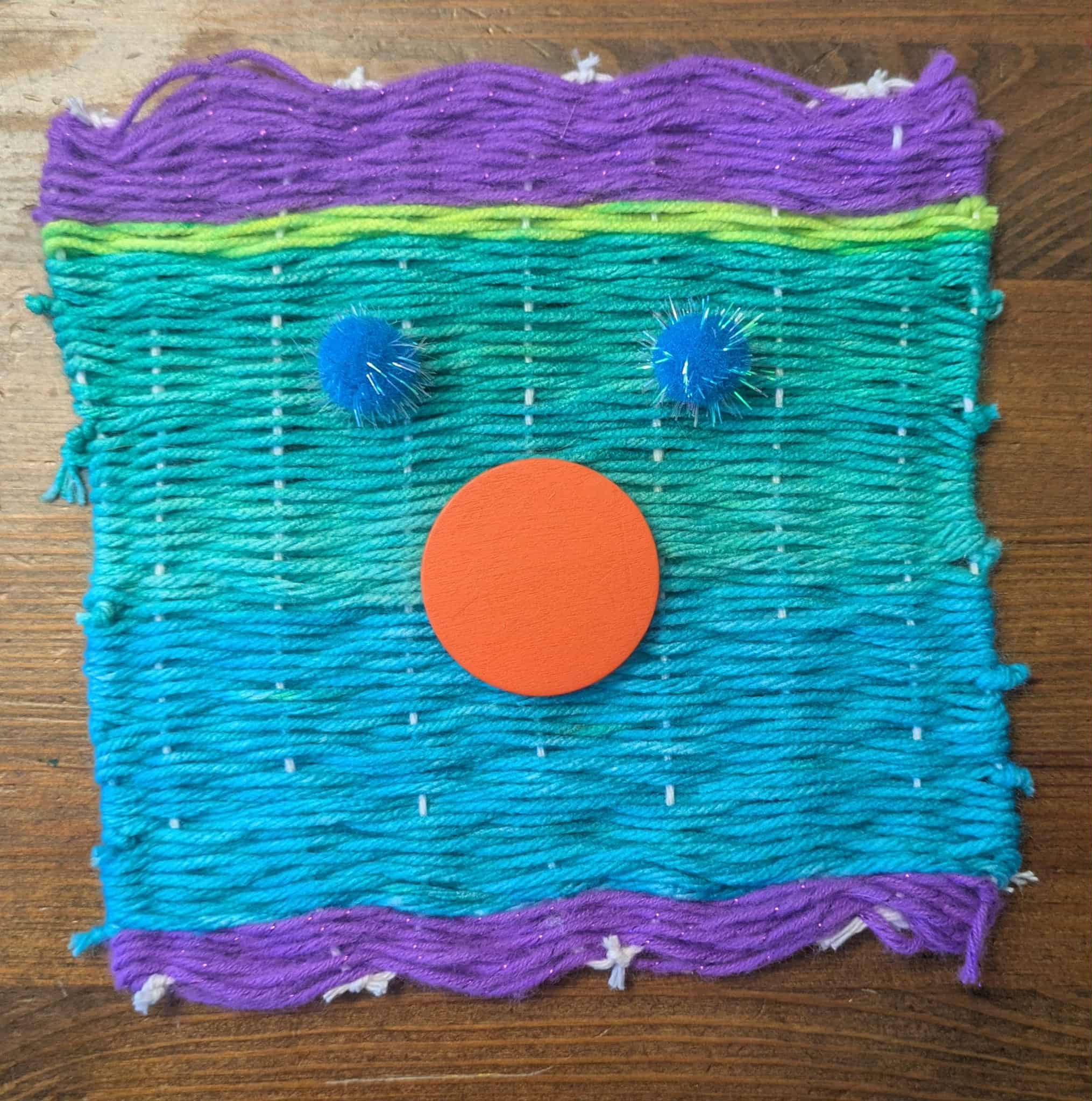
Dozer Dude’s Storyteller– The Weaving who Reads.
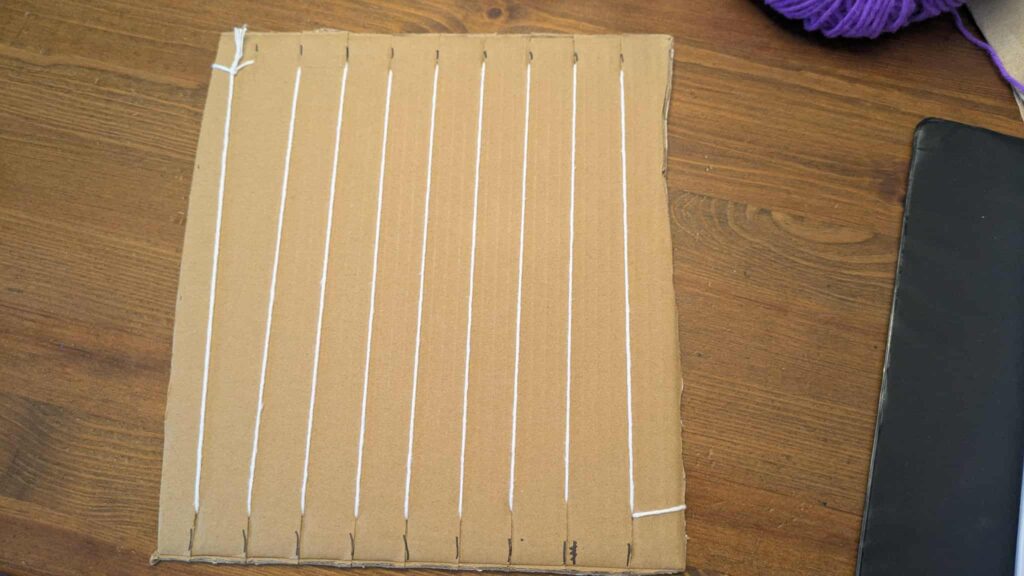
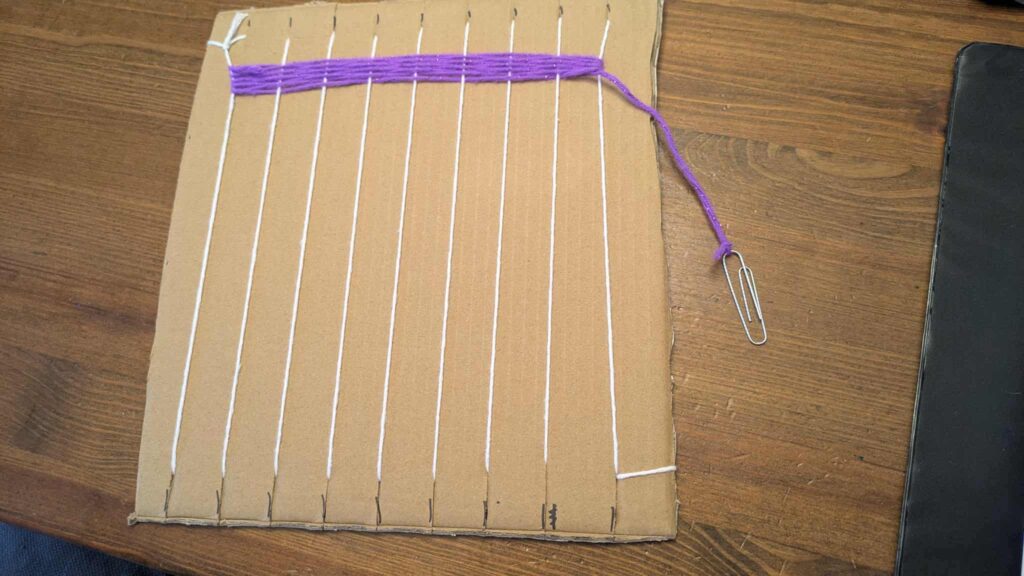
To start the weave, I grabbed a thick piece of cardboard, the kind you would find in a moving box rather than a thin food box. I measured and marked the top and bottom about 2.5 cm apart and cut small slits to create the loom. Then I wrapped cotton twine vertically around the cardboard to form the warp, measuring about ten times the length of the cardboard so I would not run out halfway through. Once that was set up, I cut two arm lengths of sparkly purple yarn for the weft. I tied one end to the top left warp string and attached the other end to a paperclip to make it easier to thread through. From there, I settled into the over under pattern, tying off each section when I reached the end and starting again with a new length of yarn.
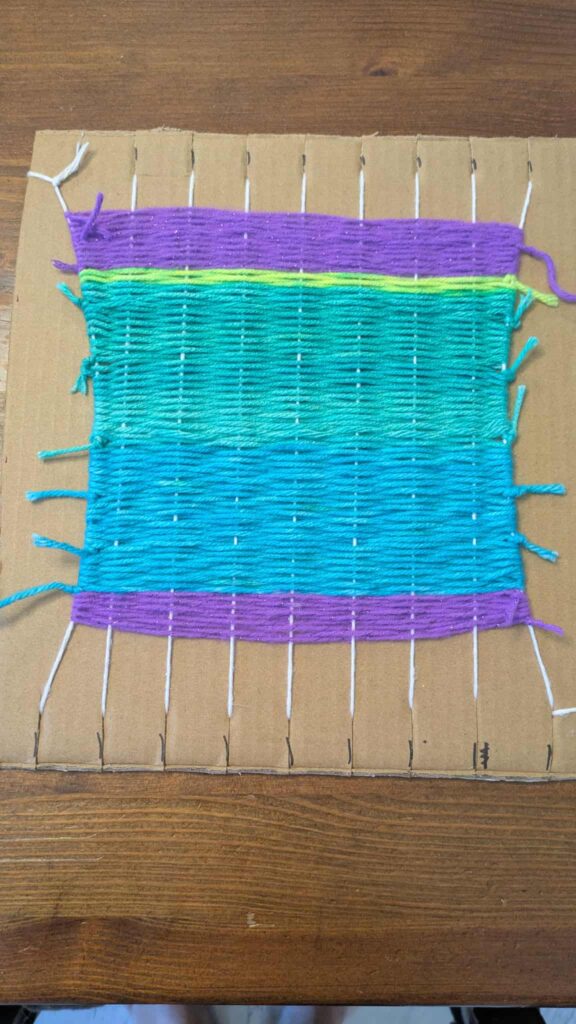
Originally, I had planned to use only the purple yarn, but partway through I realized it felt a little plain. I decided to dig through the yarn I had at home and add some variation in color and texture. Near the end, inspired by Marcelle, I looked through my children’s craft bin and added a few extra elements to give the weave more personality. The face in the weave was intentional, and once I photographed it, I was reminded of a technology project we did last semester. I decided to use ChatterPix Kids to bring it to life.
I was not sure at first what it should say, but I chose to have it read a page from my son’s favourite book, Goodnight, Goodnight, Construction Site by Sherri Duskey Rinker. His nickname is Dozer Dude, and he especially loves the page about the bulldozer. Watching his face light up when the weave “read” to him made the whole project feel incredibly meaningful.
I did not run into any major challenges, but there were small moments of problem solving. I realized midway through that I wanted more color variation, so I adjusted. At the end, I noticed I had an odd number of warp strands, which made tying off slightly awkward. If I were to do it again, I would make sure there was an even number to simplify the finishing process. Instead, I just tied the final strand securely to the previous sections and made it work. It was a small reminder that flexibility is part of creating.
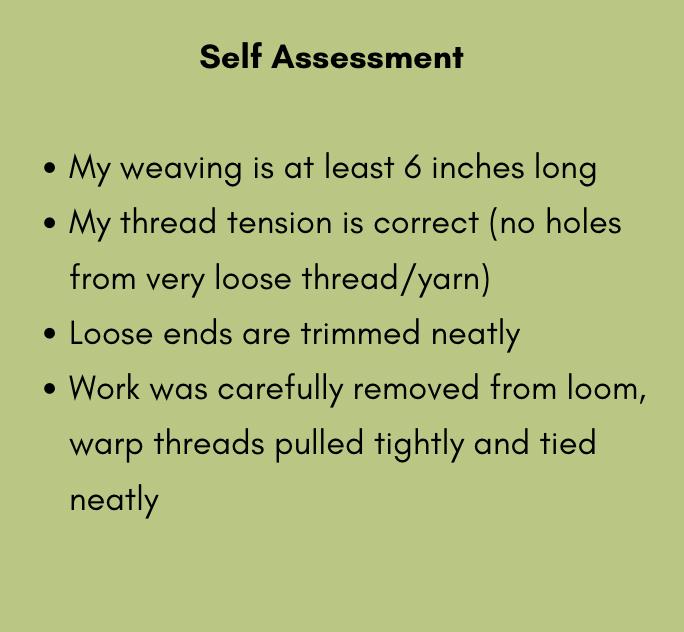
Once I got into the rhythm of weaving, it felt almost meditative. I did worry at one point that my tension was too tight because the outer strings were pulling inward, but in the end it held together well. It is not perfect, and now that I see it finished, I might have chosen different color combinations. Still, I think the imperfections are part of what make it authentic. The small inconsistencies show the process behind it.
More than anything, this project reminded me that meaningful work does not have to be complicated or expensive. With cardboard and scrap yarn, I created something intentional and personal. It reinforced how naturally I live with a resourceful mindset as a mom. Recycling often becomes crafts in our house. Dried noodles or beans turn into art. Clothing and shoes get reused and passed down. This project felt like an extension of that same way of thinking. Creativity often comes from working within limitations, not from having endless supplies.
It also reminded me that the process matters just as much as the product. The repetition required patience and attention, and it forced me to slow down. Even the small imperfections became part of the story. Most importantly, bringing the weave to life and sharing that moment with my son made the project bigger than an assignment. It became a shared experience. That moment of connection meant more than any technical detail ever could.
I had wanted to insert the instructional video Marcelle created, but the file size is too large. Note to self, the video is saved in the art folder!
Sorry, but comments are not enabled on this site.