
Inquiry Question:
How can non-Indigenous educators respectfully and authentically incorporate Indigenous perspectives into everyday classroom practice?
As I reflect on the learning from the first five modules, I realize that my understanding of this question has shifted significantly. At the beginning of the course, I was focused on finding ways to incorporate Indigenous content into my classroom. While that is still important, I now recognize that authentic inclusion is about much more than adding Indigenous resources or lessons. It is about relationships, reflection, responsibility, and rethinking how learning happens in the classroom.
One of the biggest themes that has emerged throughout the modules is the importance of land, relationships, and community. Learning about the First Peoples Principles of Learning, Two-Eyed Seeing, land-based learning, and Indigenous pedagogies challenged me to think differently about education. I have come to understand that learning is not simply about academic achievement but also about identity, belonging, connection, reflection, and responsibility. This has reinforced practices I already value, such as talking circles, outdoor learning, storytelling, and student voice, while encouraging me to be more intentional about why I use them and how they connect to Indigenous ways of knowing.
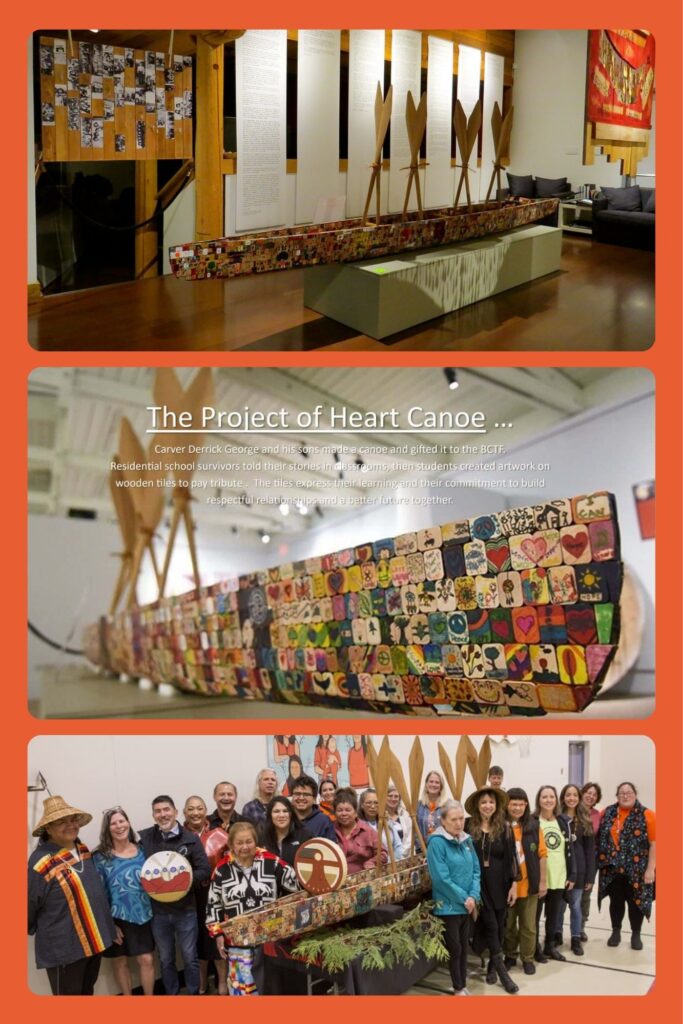
Another important area of growth for me has been understanding the ongoing impacts of colonialism. Learning about the Doctrine of Discovery, treaties, the Indian Act, residential schools, the Sixties Scoop, and Indigenous child welfare systems highlighted how many colonial structures continue to influence Indigenous Peoples today. I was struck by how much of this history was either minimized or completely absent from my own education. This learning reinforced the importance of truth-telling and reminded me that reconciliation requires more than acknowledging the past. It requires continued learning, action, and a willingness to challenge colonial narratives and assumptions.
A major area of growth for me during Module 5 was learning more about Indigenous languages, self-representation, and Indigenous resurgence. Prior to this module, I understood that language was important to culture and identity, but I did not fully appreciate the extent to which colonial systems intentionally targeted Indigenous languages or the ongoing impacts of that loss. Resources such as Lindsay Morcom’s TED Talk, Khelsilem’s Canada Needs Thriving Indigenous Languages, and the National Collaborating Centre for Indigenous Health resource on culture and language reinforced that language is much more than communication. Language carries knowledge, worldview, identity, relationships, history, and culture. I was particularly struck by the idea that language loss is not simply the loss of words, but the loss of teachings, stories, and ways of understanding the world. At the same time, I was inspired by the strength and determination of Indigenous communities working to revitalize and reclaim their languages despite generations of colonial suppression. This reminded me that reconciliation is not only about acknowledging loss but also about supporting resurgence, revitalization, and self-determination.
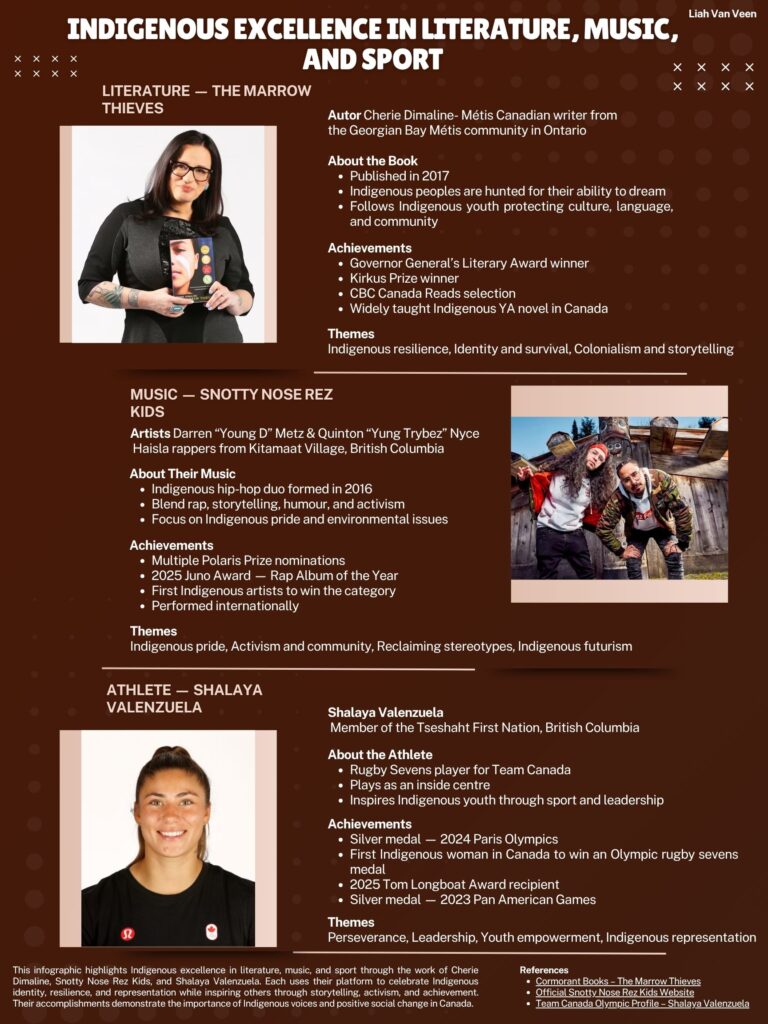
Another important takeaway from this module was the significance of self-representation. Through resources such as Reclaimed and discussions surrounding Indigenous influencers, I reflected on the power of Indigenous Peoples telling their own stories rather than having others tell stories for them. This connected strongly to The Danger of a Single Story, which has remained a recurring theme throughout my learning. I realized that authentic representation matters not only in literature and media but also in classrooms. Students need opportunities to see Indigenous Peoples represented as leaders, creators, language speakers, activists, artists, athletes, and community members rather than only through narratives of trauma and colonization. At the same time, I reflected on how social media can be both empowering and harmful. While it can create spaces for Indigenous youth to share their voices and challenge stereotypes, it can also expose them to racism, misinformation, and harmful assumptions.
The resources on Idle No More, Indigenous land defenders, and Indigenous resurgence also expanded my understanding of reconciliation. Prior to this course, I often thought about reconciliation primarily in terms of historical and ongoing events such as residential schools. These resources helped me understand that reconciliation is also connected to land, sovereignty, environmental stewardship, language revitalization, and Indigenous self-determination today. I was particularly inspired by the strength of Indigenous leaders and communities advocating for their lands, cultures, and future generations. These examples reinforced that Indigenous Peoples are not simply responding to colonialism but are actively shaping their futures through leadership, advocacy, and community action.
The learning surrounding circles and witnessing also connected strongly to my own classroom practice. I already use talking circles during morning meetings and group discussions, but this module helped me think more intentionally about the purpose behind these practices. I have come to understand that circles are not simply discussion strategies but approaches rooted in relationship-building, listening, respect, reflection, and community. Moving forward, I want to continue creating opportunities for students to share their experiences, listen to one another, and learn through respectful dialogue.
Throughout the course, I have also spent a great deal of time reflecting on my role as a non-Indigenous educator. I continue to worry about making mistakes or unintentionally causing harm, but I am beginning to understand that humility, listening, and a willingness to learn are essential parts of this process. Resources on allyship, witnessing, bias, and self-reflection reinforced that this work is lifelong and that growth comes from being willing to reflect, ask questions, and learn from mistakes rather than avoiding difficult conversations altogether.
One of the most significant shifts in my thinking has been realizing that Indigenous perspectives should not be treated as special events or isolated units of study. Instead, they should be naturally woven throughout everyday classroom experiences. This can happen through authentic literature, talking circles, land-based learning, local Indigenous perspectives, storytelling, relationship-building, and opportunities for reflection. I have learned that reconciliation in education is not about checking a box; it is about creating learning environments where Indigenous voices, histories, perspectives, and ways of knowing are respected and valued every day.
As I continue this inquiry, I do not feel that I have found a final answer. Instead, I have realized that the question itself will continue to evolve throughout my teaching career. What I do know is that respectful and authentic incorporation of Indigenous perspectives begins with relationships, listening, reflection, and a commitment to ongoing learning. I hope to continue learning from Indigenous voices, communities, Elders, colleagues, students, and the land itself so that I can create classroom spaces that are more inclusive, honest, and responsive to the histories and realities of the place where I teach.
This course has reinforced for me that reconciliation is not a destination but an ongoing responsibility. As an educator, I have a role to play in helping students understand multiple perspectives, question assumptions, build respectful relationships, and learn from the truths of the past while working toward a more equitable future.
Sorry, but comments are not enabled on this site.